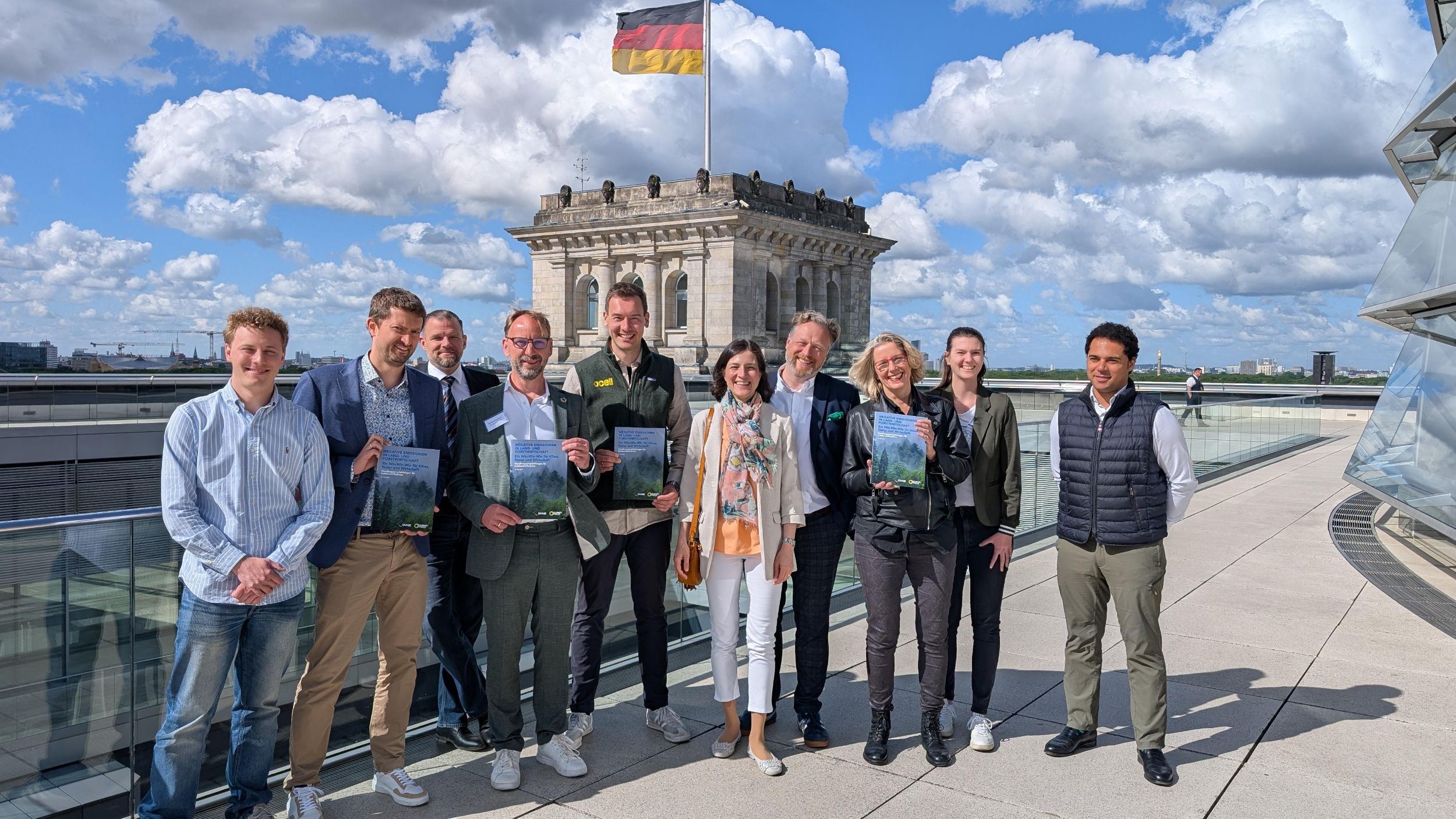
Historic moment in the Bundestag: study on negative emissions presented
A historic milestone for climate protection took place on the premises of the German Bundestag: the study “Negative Emissions in Agriculture and Forestry – A Win-Win-Win for Climate, Nature and the Economy” was presented for the first time – right at the political heart of Germany. The presentation of this study by Climate Focus and the German Association for Negative Emissions (Deutscher Verband für negative Emissionen e.V., DVNE) marks a turning point. It makes clear that carbon dioxide removal and climate-positive agriculture have now arrived at the highest political level. You could practically feel the spirit of a new beginning: now it’s getting started! – the starting signal for a new era of climate-positive measures.
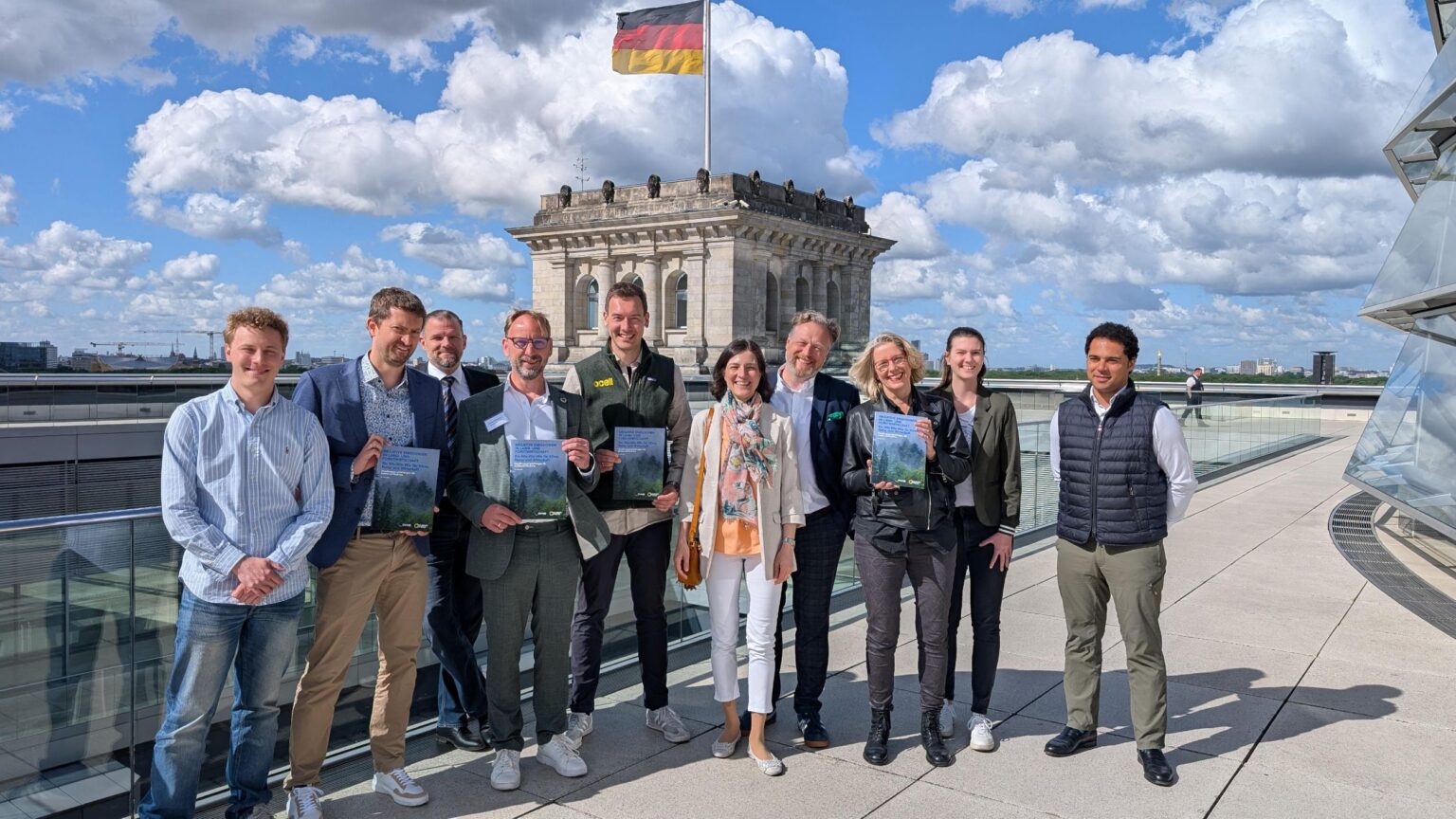
Presentation of the climate study in the Bundestag
The study was presented in the Bundestag on 15 May 2025 to an expert audience from politics, business and science. Bernhard Aumann, CEO (Vorstand) of tgo AG, took part as an active co-author of the recommendations and contributed the practitioner’s perspective. This commitment by tgo AG underlines its role as a scientifically grounded and practice-oriented partner for farmers, companies and policymakers.
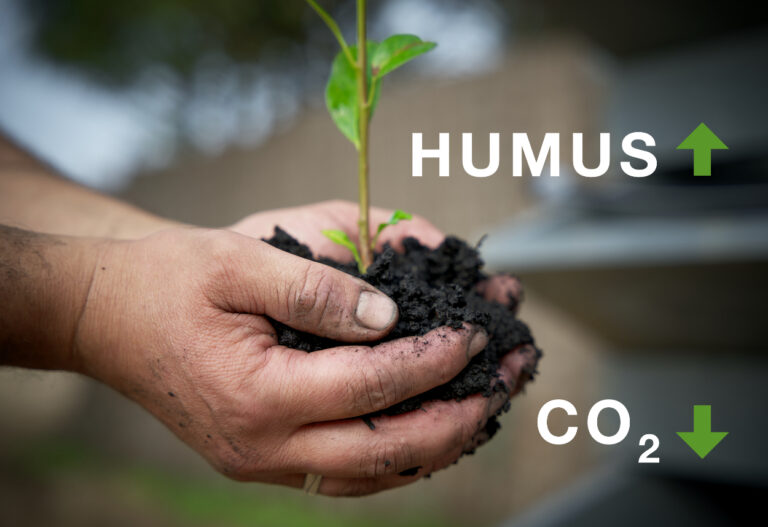
Why is this study so significant? It shows a way for Germany to achieve its climate targets: the Federal Climate Change Act requires the land use, land-use change and forestry (LULUCF) sector to build up a net sink of –25 million tonnes of CO₂ by 2030. But the current reality is different – the LULUCF sector has turned from a CO₂ sink into a CO₂ source and most recently caused net emissions of 68.7 million tonnes of CO₂ in 2023. This alarming development makes it clear: in addition to emission reductions, we also need active negative emissions, for example through humus build-up, afforestation or biochar, to bind carbon permanently.
This is where the findings of the study come in. Climate Focus and DVNE show that voluntary carbon markets are a crucial lever. They can mobilise private capital to implement natural climate solutions and technologies such as biochar on a large scale. So far, however, confusing political signals and partly negative media coverage have held back such investment. The presentation in the Bundestag therefore sends a clear signal to policymakers: create reliable framework conditions, and companies and farmers will invest together to turn our forests, soils and peatlands back into carbon sinks.
Eight concrete policy recommendations
Together for CO₂ negativity: experts from DVNE, Climate Focus, tgo AG and partners present the study in the Bundestag.
The study culminates in a clear appeal to the Federal Government to act now. Based on the results, eight concrete recommendations are proposed on how voluntary carbon markets can be strengthened and climate-positive agriculture promoted:
- Clear commitment to the voluntary carbon market: the Federal Government should unequivocally recognise the role of voluntary carbon markets and nature-based solutions.
- Clear rules to avoid double counting: it must be ensured that climate protection achieved voluntarily is not counted twice – companies need reliable recognition in their carbon accounts.
- Reliability and permanence of nature-based solutions: there must be unambiguous clarity that nature-based climate solutions have a lasting effect and are crucial for achieving climate targets (keyword: permanence).
- Credible climate claims by companies: companies need guidelines on which climate claims are permissible and what role carbon credits may play in them, in order to avoid accusations of greenwashing.
- Eligibility of CO₂ removal projects for funding: uncertainties about state funding options for negative emission projects must be cleared up so that innovative projects can receive financial support.
- Removing legal barriers for biochar: existing legal barriers – for example on the use of biochar as a soil improver – must be removed so that investment is no longer held back.
- Increasing demand for carbon credits: the public sector can act as a role model and actively create demand for high-quality carbon credits, e.g. through its own climate neutrality targets or procurement programmes.
- Facilitating project development: the development of new climate protection projects should be made easier through better framework conditions – for example through more transparency, suitable market infrastructure, cooperation and the identification and provision of suitable land for climate protection projects.
These eight recommendations are a roadmap for climate-positive agriculture and forestry. If they are implemented, a functioning market will emerge that offers farmers new income opportunities and enables companies to achieve effective climate protection – a true win-win-win for climate, nature and the economy. It is now up to policymakers to take up this roadmap.
tgo AG – scientifically grounded and practice-oriented
The active involvement of Bernhard Aumann and tgo AG in shaping the study shows: we don’t just talk about climate protection – we help shape it. With this commitment, tgo AG underlines its role as a leading authority on CO₂ negativity, voluntary carbon markets and climate-positive agriculture in Germany. Our approach combines a scientific foundation with practical experience: from carbon farming (carbon sequestration in soils) and sustainable forestry to trading in carbon credits – we develop solutions that work and deliver measurable climate benefits.
As a practice-oriented partner, we support farmers in building up humus and sequestering emissions. We help companies develop effective climate strategies and use high-quality carbon credits from regional projects. And we are in close dialogue with political decision-makers in order to help shape framework conditions based on the latest scientific findings. Through this interface role – between science and practice, between agriculture and climate policy – tgo AG can make a decisive contribution to turning good recommendations into action.
Collaboration is important to us: the presentation in the Bundestag was realised together with strong partners. Those involved included DVNE (Deutscher Verband für negative Emissionen e.V.), Climate Focus, Tree.ly, goodcarbon, Ocell, NatureRe Capital AG and the eva foundation. This broad alliance of start-ups, established companies, science and civil society shows how much potential can be unleashed when everyone pulls together. Together, we are driving forward the vision of a climate-positive future.
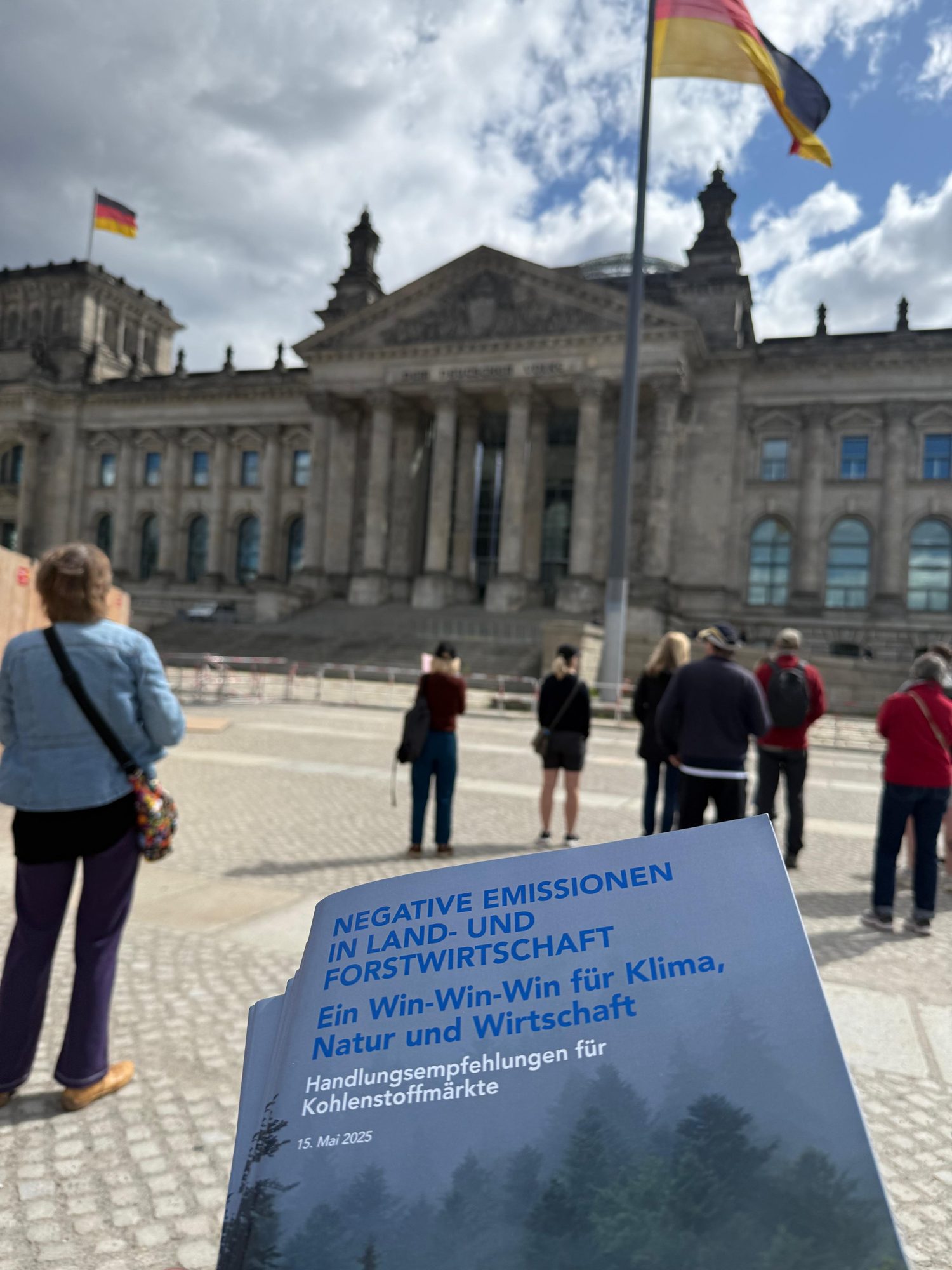
Now it’s getting started – let’s act together!
The presentation of the study in the Bundestag feels like a starting signal. Now it is time to put the findings into practice on the ground. Now it’s getting started: let’s turn ambitious climate targets into concrete reality! tgo AG is ready to take the next step together with you – visionary, well-founded and inspiring.
Would you like to become part of this climate-positive movement? Contact us today to take your climate protection journey to the next level together. Let us turn visions into action – fact-based, professional and effective. Act now – for a sustainable, climate-positive future!