Why restoring peatlands is key to climate protection
Author: Bernhard Aumann
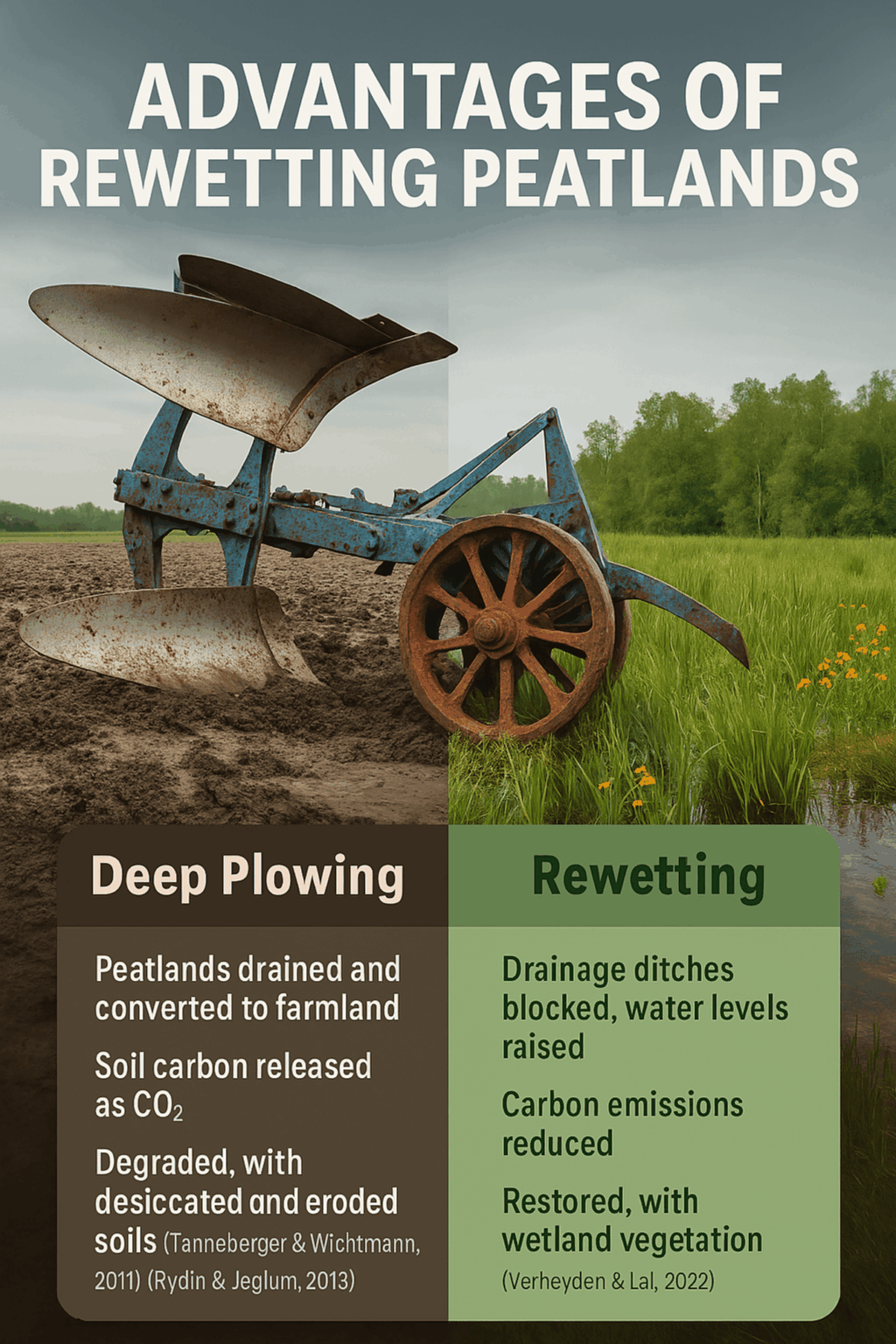
In the post-war decades it was regarded as progress: so-called deep ploughing, which was used to reclaim peatland for cultivation. Ploughshares reaching several metres deep were used to mix the organic peat layers with the mineral soil beneath. The aim was to make drained land permanently usable for agriculture – a practice that has left its mark to this day in regions such as the Wesermarsch, the Teufelsmoor and Goldenstedt.
But what was celebrated back then as a gain in efficiency is, from today’s scientific perspective, an ecological disaster:
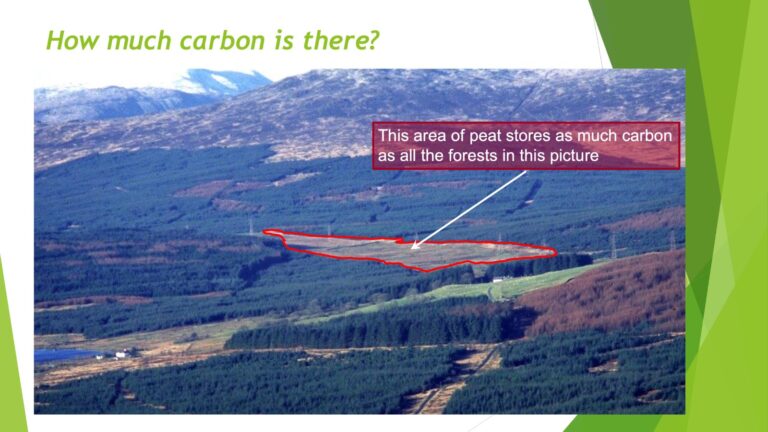
- Destruction of valuable carbon stores: Intact peatlands store up to 1,400 tonnes of CO₂ per hectare. Deep ploughing causes the peat to oxidise, and huge amounts of CO₂ escape into the atmosphere.
- Drained soils lose their function: They can neither store water nor provide a habitat for species typical of peatlands.
- Sanding-up and yield losses: Without water and a stable soil structure, formerly fertile land becomes ecologically and economically dead soil.
The turning point: why rewetting is the only option
Today, science and practice show us clearly: only through rewetting can peatlands be reactivated as natural climate protectors.
The benefits of rewetting at a glance:
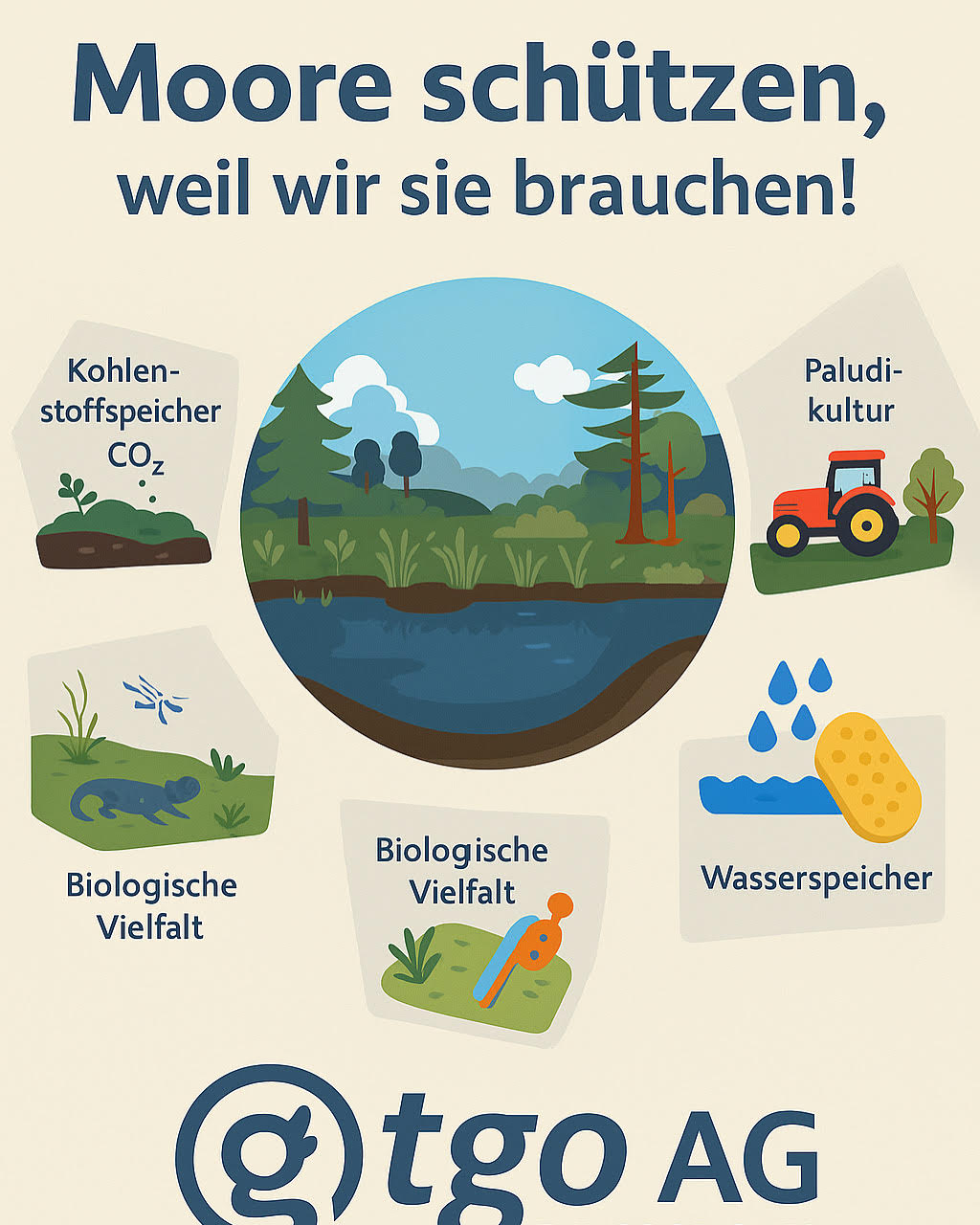
- Carbon sequestration: Peat formation resumes – CO₂ is stored instead of released.
- Water storage: Restored peatlands buffer heavy rainfall and protect against drought.
- Biodiversity: Rare plant and animal species return.
- Climate adaptation: Peatlands cool the landscape and stabilise microclimates.
- Future-proof use: With so-called paludiculture (wet farming), reed, peat moss or bulrush (cattail) can be used commercially – without destruction.
What we do: tgo AG as your partner for rewetting
At tgo AG, we support regions, farmers and companies in analysing, restoring and using damaged peatland in an economically sustainable way. With our carbon credit system, modern biodiversity monitoring and individual advice, we make peatland protection measurable and marketable.
We cannot undo the past of deep ploughing – but we can understand it, make it visible and learn from it. With every square metre of rewetted land, we win back a piece of the future. Would you like to find out more or have the potential for rewetting assessed? Then contact us now. Together we protect the climate, biodiversity – and your future.