
Buildings as carbon stores: what the EU CRCF means for construction and agriculture
Expert article · CRCF
Buildings as carbon stores: timber, straw, hemp, Miscanthus, cattail from paludiculture and biochar store carbon that grew in fields, forests and peatlands. With the third pillar of the EU CRCF – carbon storage in long-lasting products – this storage is set to become certifiable for the first time. We summarise what is settled in autumn 2026, what is still open and what it means for agriculture and construction.
Three pillars, one framework
| Pillar | What counts | Status October 2026 |
|---|---|---|
| Permanent removals | DACCS, BioCCS, biochar | Delegated Regulation (EU) 2026/285, in force since 7 May 2026 |
| Carbon farming | Humus build-up, peatland rewetting, agroforestry, soil emission reductions | Delegated act C(2026) 4666 in procedure |
| Storage in products | Bio-based building materials in long-lasting buildings | Methodology announced by the Commission for Q4 2026 |
An EU-wide registry for certified units is planned by 2028. Until then, the recognised certification schemes run their own interoperable registries.
A practical test in Germany
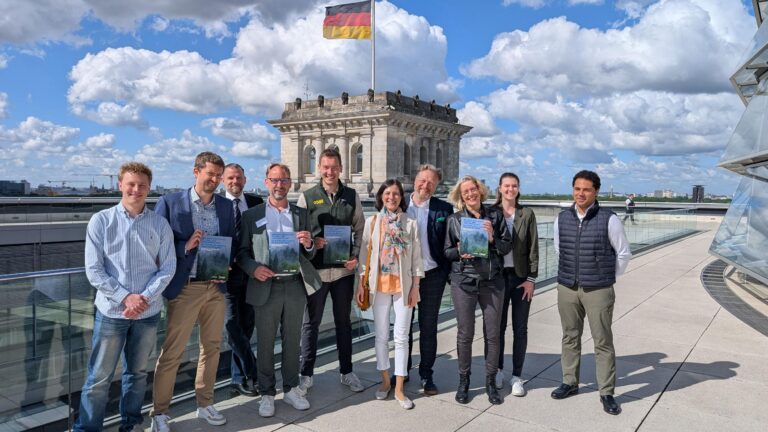
The German Sustainable Building Council (DGNB) and WoodenValley gGmbH (Stuttgart) have been testing the CRCF on real buildings and infrastructure in a practice study since October 2026: how available are the data, how high is the effort, how market-ready are storage certificates? The results are to feed into the methodology discussion in Brussels. In parallel, DGNB founded an “Alliance for CO₂ Removal in Construction” in September 2026. tgo AG followed the information session as an observer and prepared the content for the Smart Carbon Farming partners.
The CarbonLÄND v1.0 methodology
The study is based on the CarbonLÄND methodology (v1.0, May 2026), developed in the TÝR research project of the Holzbau-Offensive Baden-Württemberg with Hochschule Esslingen and Timber Finance. It translates the CRCF requirements into a workable process.
Temporary net carbon removal benefit (TNCRB) = CRbaseline − CRproject − GHGassociated
- CRbaseline: carbon stored in the reference case for the building type – standardised from a building cadastre with around 57 million records
- CRproject: carbon stored by the bio-based project
- GHGassociated: emissions of life-cycle modules A1–A5 (raw material to installation)
- TNCRB must be greater than zero. 1 t CO₂e = 1 unit; 15% is withheld as a risk buffer.
- System boundary: the building. Bio-based materials in the load-bearing structure and insulation are eligible; other bio-based materials are additionally reported in the study.
- New-build only is certifiable as things stand. Renovations and extensions are assessed for information.
- Red line: timber must come from certified sustainable forestry.
- Duration: 50-year reference period, monitoring every five years. If the building is demolished or the structure altered earlier, the units lapse – the buffer insures against this.
- Data: ÖKOBAUDAT and manufacturer-specific EPDs; a full LCA is not required, a material take-off is sufficient.
- Timeline: according to the project partners, certification of completed buildings is expected from the end of 2027.
What this means for agriculture and peatlands
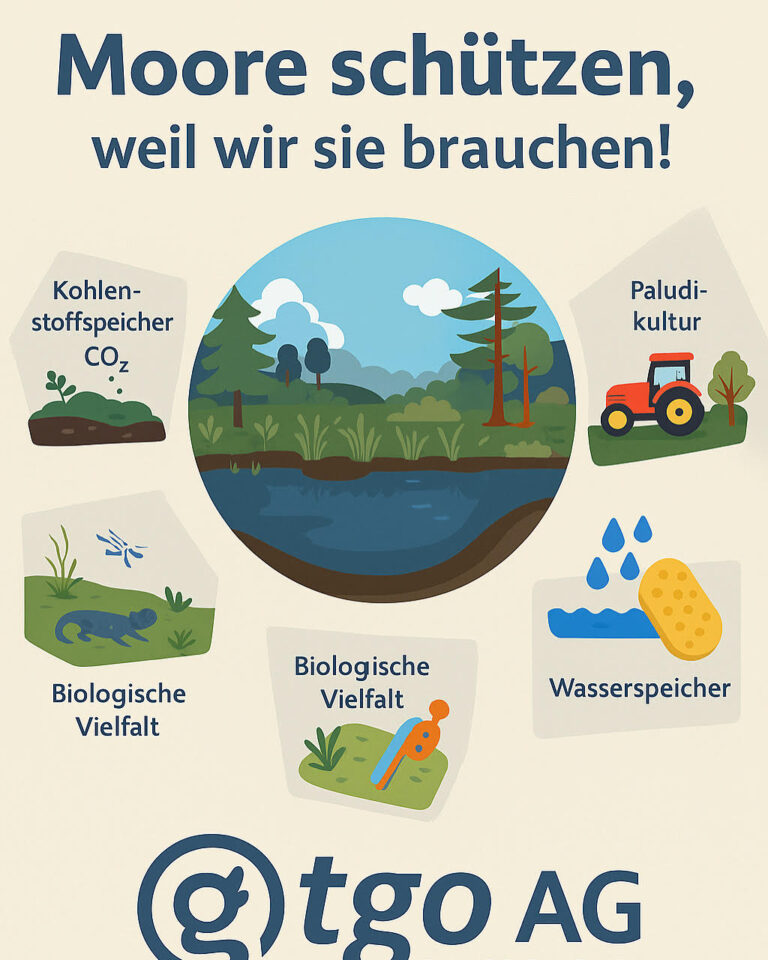
Every tonne stored in a building starts as biomass. This creates new demand for materials that farmers and peatland managers can supply: structural timber, straw, hemp, Miscanthus, reed and cattail from paludiculture – and biochar as an additive. This is particularly interesting for paludiculture because it can link several CRCF pillars: rewetting (carbon farming), building materials (storage in products) and biochar (permanent removal). One rule remains essential: the same tonne may only be counted once.
Biochar in building materials: measure, don’t estimate
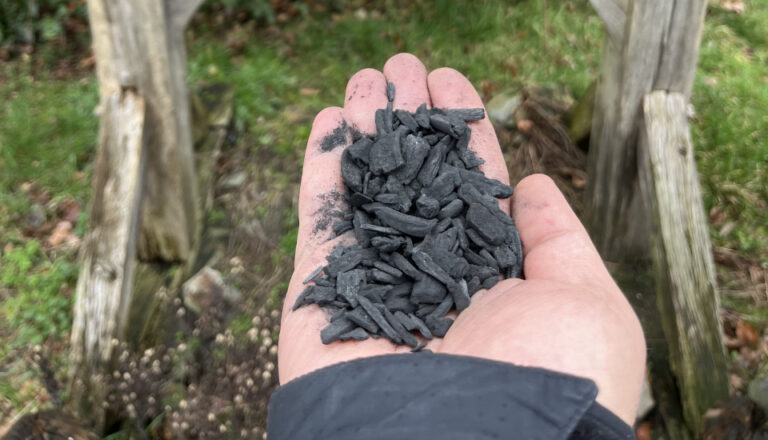
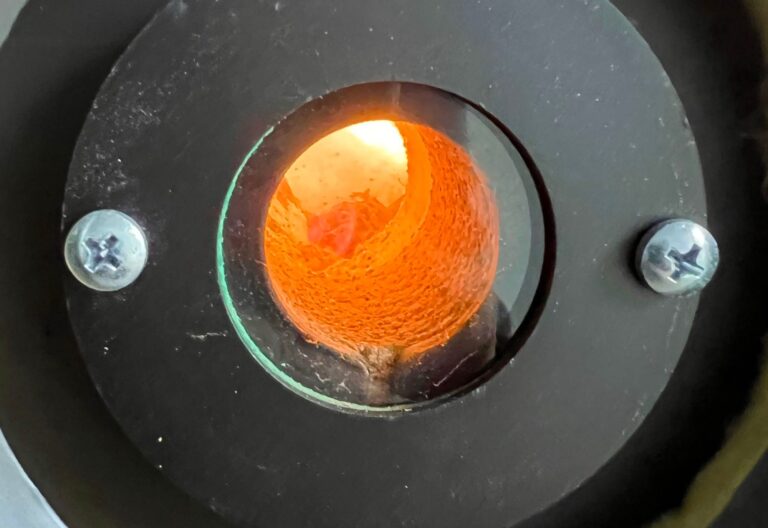
Once biochar is bound into concrete, plaster or composites, its share can no longer be determined cleanly via the H/C ratio. Random reflectance microscopy, by contrast, measures only the charred particles and is therefore the only method that can assess the char separately within the composite. More on this in our article “How permanent is biochar?”.
Our assessment
- The direction is clear, the details are open: anyone who documents product and quantity data properly today (EPD, DoPC, bill of quantities) will be ready as soon as the methodology is final.
- Price expectations for building units cited by market participants (around €105–300 per unit) are forecasts; in our balances we use the lower end.
- An additional sales channel opens up for agricultural raw materials – provided origin and sustainability are fully documented.
Planning a project with bio-based building materials? On our page Building materials as carbon stores we show how we approach it.
Sources
- DGNB e.V. and WoodenValley gGmbH: digital information session “CRCF study”, 16 September 2026.
- CarbonLÄND v1.0 (4 May 2026): Methodology for certification of bio-based carbon storage in buildings under the EU CRCF regulation. Holzbau-Offensive Baden-Württemberg.
- Regulation (EU) 2024/3012 (CRCF) – EUR-Lex; Delegated Regulation (EU) 2026/285.
About the author: Bernhard Aumann is CEO (Vorstand) of tgo AG and a partner in the Interreg project Smart Carbon Farming. tgo AG is not involved in the study or alliance mentioned and gives its professional assessment here. Contact: info@tgo.ag