CO₂-Schatz Artland: pyrolysis as the key to CO₂ sequestration and soil improvement
Author: Bernhard Aumann
In the face of climate change, the focus is shifting not only to reducing emissions but above all to actively removing CO₂ from the atmosphere. But how can carbon dioxide be drawn out of the air over the long term and stored safely? The “CO₂-Schatz Artland” project points to a promising path: by combining nature-based solutions with state-of-the-art technology – specifically pyrolysis – CO₂ is locked into the soil in a stable form while soil quality is improved at the same time. This flagship project of tgo AG demonstrates in practice what high-quality, measurable climate protection can look like: agriculture, renewable energy and carbon storage work hand in hand. Below, we examine the role of pyrolysis in CO₂ sequestration, explain the concept behind CO₂-Schatz Artland and show how biochar acts as a permanent carbon store. We also take a look at the scientific quality analysis by FUSINITE – including modern indicators such as OI, HI, S2, S3 and Ro – and at the experts involved, such as Hamed Sanei. The Guntamatic pyrolysis plant used on site is also presented as an example of innovative technology.
Pyrolysis – an ancient technique for modern climate protection
What is pyrolysis? Pyrolysis is a thermochemical process in which organic material (biomass) is carbonised in the absence of oxygen and at high temperatures. Essentially, it is the controlled production of charcoal or biochar. Thousands of years ago, people were already using similar methods to produce charcoal – for example to improve the soil in the Terra Preta of the Amazon region. Today, this traditional principle is being revived with high-tech plants. At temperatures of typically 400–750 °C, pyrolysis breaks down the complex organic carbon compounds in biomass into various products: part is released as pyrolysis gas and oil (and can serve as an energy source), while the rest remains as solid biochar. This biochar is rich in elemental carbon, porous and highly resistant to decomposition.
Relevance for climate protection: normally, when plants rot or are burned, they release the carbon they have stored back into the atmosphere as CO₂. Pyrolysis cleverly interrupts this cycle: a large proportion of the carbon is converted into a stable, solid form instead of being able to escape again. As a result, CO₂ can be permanently removed from the atmosphere – this is referred to as negative emissions, because CO₂ is removed from the cycle on a net basis. Scientific studies confirm that the carbon structure created during pyrolysis is extremely long-lived: carbonisation produces highly aromatic, polymerised carbon compounds that remain stable in soils for many centuries, in some cases millennia, and break down only very slowly. This is precisely what makes pyrolysis an important nature-based climate protection technology: it uses renewable biomass (nature) and, with the help of technology, converts it into a permanent carbon store. Its climate relevance is enormous – which is why this process has recently been increasingly recognised as a practical CO₂ removal solution. New studies emphasise that biochar has so far been underestimated as a permanent CO₂ sink and can make a substantial contribution to climate protection.
Pyrolysis also supplies valuable energy: the resulting gases and oils can be burned or used to generate electricity. In many pyrolysis plants, the energy released is used directly, for example for heating. This replaces fossil fuels and achieves a double climate effect – emission savings and CO₂ removal. In short, pyrolysis combines climate protection with energy generation and resource efficiency.
CO₂-Schatz Artland – agroforestry and biochar as a carbon sink
A practical example of this strategy is the CO₂-Schatz Artland project in Lower Saxony. It shows how farmland can deliver genuine CO₂ storage through smart management and pyrolysis, combined with the promotion of biodiversity and renewable energy generation. Specifically, CO₂-Schatz Artland uses the following building blocks:
- Agroforestry systems: at Forsthof Artland, trees (e.g. poplars) grow in combination with agricultural land. Woody plants are integrated into the farmland across around 15 hectares. Year after year, these trees take up CO₂ from the air and incorporate it in the form of wood and roots. At the same time, they protect the soil from erosion, provide shade and promote biodiversity. The wood from regular pruning later serves as feedstock for pyrolysis.
- Perennial crops: instead of cultivating the fields exclusively with annual crops, the project relies on perennial plants. One example is cup plant (Silphium perfoliatum), a tall-growing energy crop that remains in the field for several years. Perennial crops such as silphium have deep root systems and drive humus build-up in the soil – so they also store CO₂ and improve soil structure. In addition, they supply biomass every year (for example in the form of cuttings) without the need for ploughing and reseeding. Part of this biomass can also be fed into pyrolysis.
- Flower strips and biodiversity areas: around 5 hectares of the land at Forsthof Artland are designated as wildflower areas. These species-rich meadow strips provide habitat for insects and wildlife – a plus for biodiversity. They are mown gently once or twice a year so that a diverse range of herbs can become established. The harvested cuttings are not waste, however, but are put to further use: they are mixed with the biochar produced and fermented in the absence of air (comparable to composting). After a few months, this produces a Terra Preta-like soil – a black earth rich in humus and carbon. This is returned to the fields (beneath the poplars and silphium), where it improves soil health and locks the carbon into the ground over the long term. This closes the loop in an elegant way.
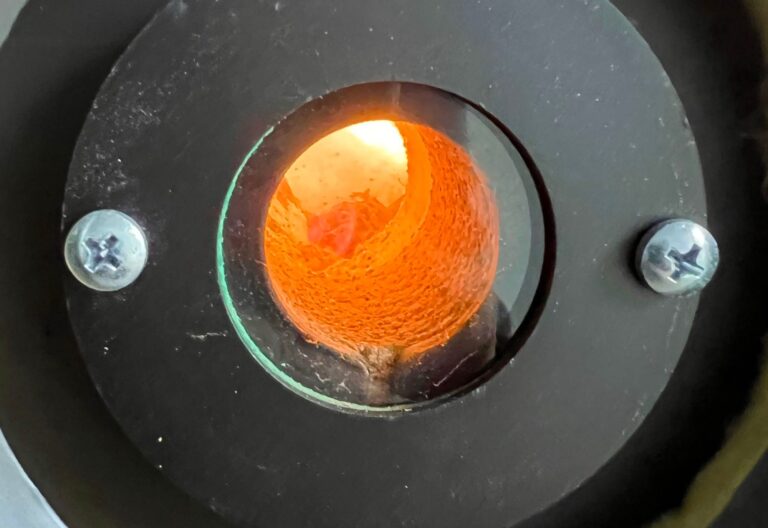
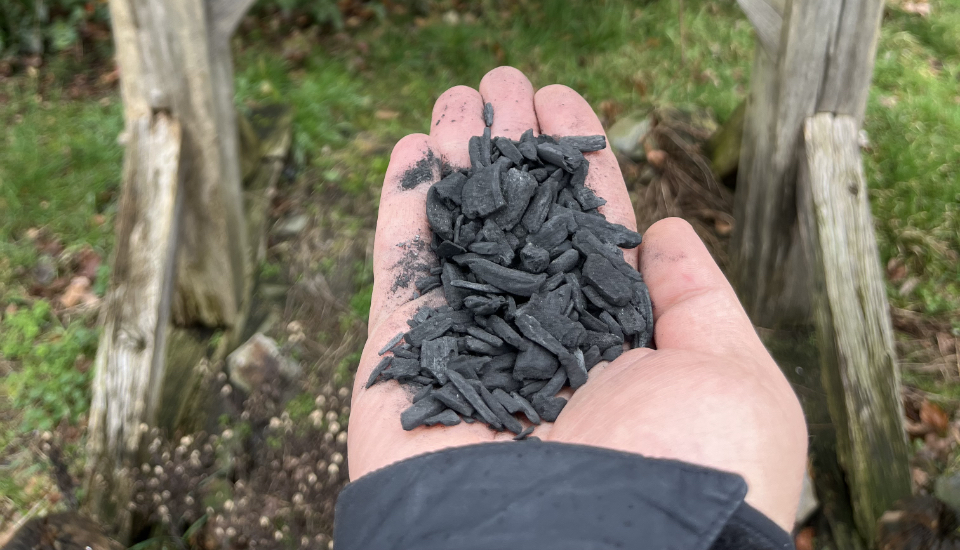
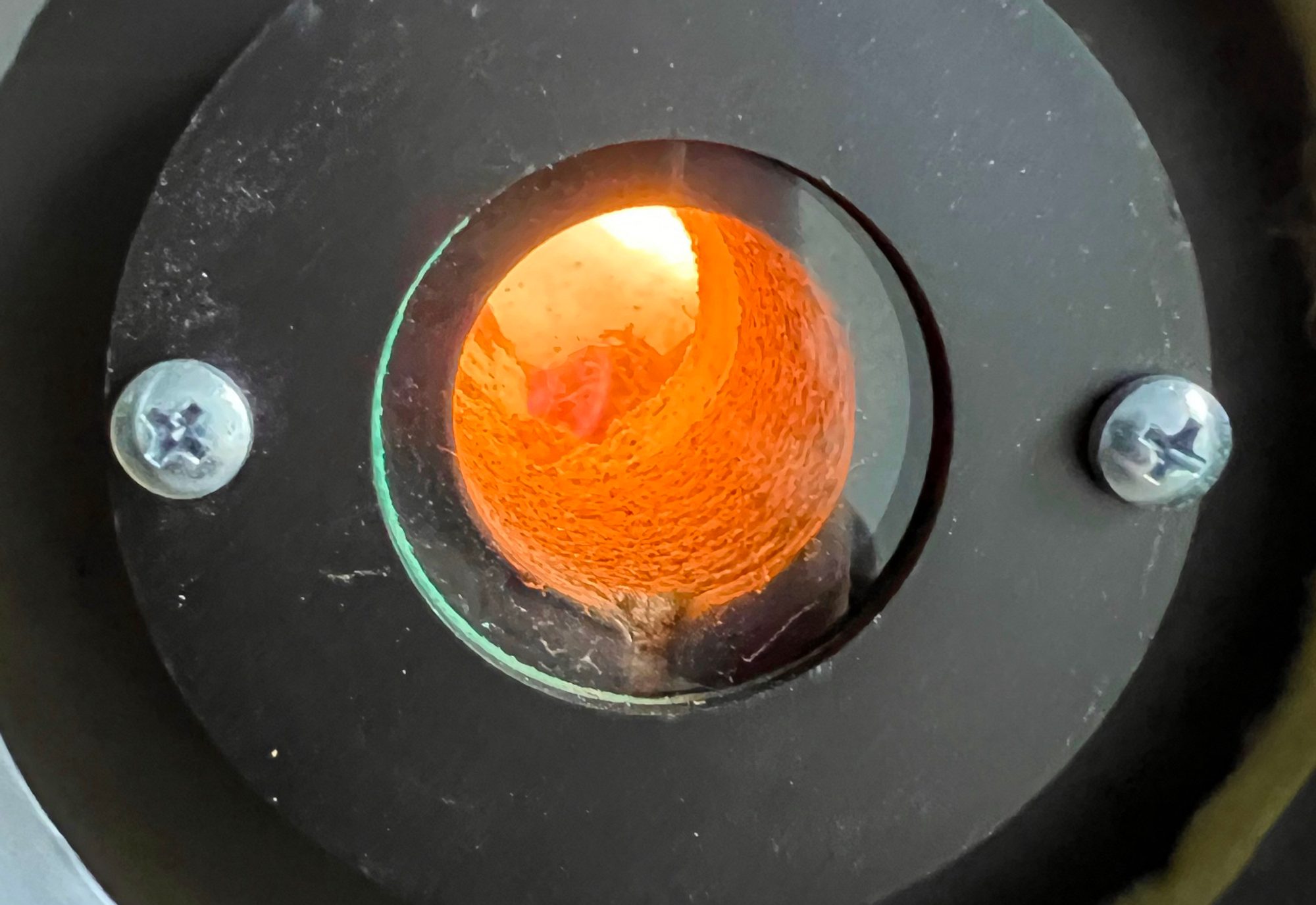
- Pyrolysis and biochar: the heart of the project is a 75 kW pyrolysis plant (a Guntamatic pilot plant) on the farm. It currently runs on wood chips from residual wood and landscape maintenance material and, in future, is intended primarily to use wood from the farm’s own agroforestry trees. The plant generates heat that fully heats the historic farm buildings (approx. 650 m² of residential and office space) – meaning the Forsthof no longer needs natural gas and is self-sufficient in energy. At the same time, the plant produces biochar: around 20–25 % of the biomass input remains as solid char. As described above, this biochar is incorporated into the soil on site (by mixing it with the flower-strip cuttings and fermenting it into Terra Preta). In this way, carbon previously removed from the air is stored permanently in the soil. The pyrolysis plant is already running successfully and is being fine-tuned during the first months of operation to achieve an optimal end product (high-quality biochar).
Thanks to this integrated concept, CO₂-Schatz Artland acts as a living carbon store: trees and plants draw CO₂ from the atmosphere, pyrolysis converts part of the biomass into stable carbon, and this carbon goes into the soil, where it can no longer escape as a greenhouse gas. At the same time, there are side benefits for the farm and the environment: more fertile soils, greater biodiversity and renewable heat. It is therefore a model project for carbon farming that unites agriculture and climate protection. The project is also accompanied scientifically (including as part of trafo:agrar, a research network on the transformation of agriculture) in order to record the exact CO₂ savings and sequestration effects. Together with partners – such as the local Kreissparkasse as sponsor and tgo AG as developer – work is under way on the certification of the CO₂ storage. The aim is to ensure that the climate benefits achieved become measurable and tradeable, for example in the form of high-quality carbon credits for companies with ESG targets.
Biochar: stable carbon storage and better soils
A central element of CO₂-Schatz Artland is the biochar produced by pyrolysis. Why is it so important? Biochar has special properties that make it both an excellent carbon store and a valuable soil improver.
Longevity: carbonisation converts biomass into almost pure carbon that is structurally similar to the natural carbon found in coal. This “pyrogenic” carbon is barely degradable by microbes. Whereas fresh biomass would rot within years or decades, biochar can remain in the soil for centuries to millennia. Finds of Terra Preta in the Amazon (black earth that is in some cases over 1,000 years old) impressively demonstrate how persistently such charred residues survive in the soil without releasing their carbon again. Current research even assumes that high-quality biochar can, under certain conditions, remain stable over geological timescales – meaning the CO₂ is removed from the atmosphere almost permanently. This extraordinary stability makes biochar a reliable method of carbon dioxide removal which, unlike some other methods, does not carry the risk of the carbon being released again soon.
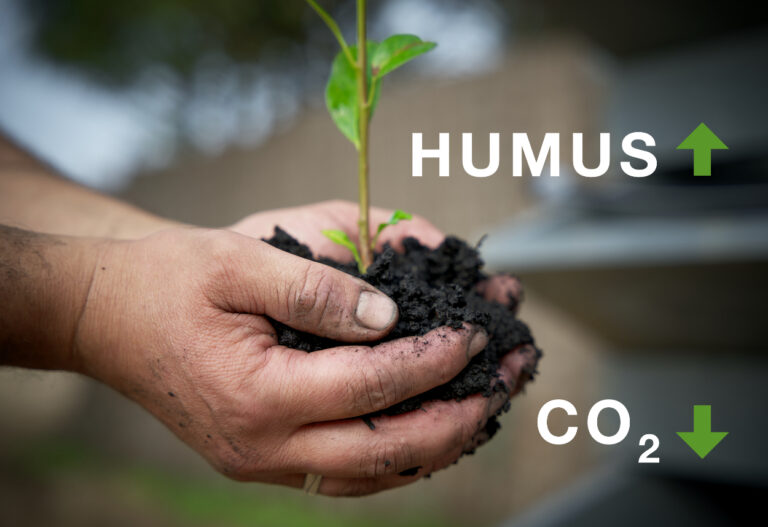
Soil improvement: alongside its climate effect, biochar offers direct practical benefits for agriculture. Thanks to its porous structure, it can store water and nutrients and provides a habitat for soil microorganisms. When biochar is incorporated into the soil (often in combination with compost or slurry so that it “charges up” with nutrients), it improves soil fertility sustainably. This makes it possible to create Terra Preta-like soils that are more fertile and deliver higher yields. In the Artland project, for example, it became apparent that biomass from the flower strips fermented with biochar produces a very humus-rich soil which, when applied to the agroforestry plots, optimises the growing conditions for poplars and silphium. Biochar also increases the soil’s water-holding capacity – a blessing in dry periods – and binds surplus fertiliser so that nutrients are released to plants more slowly and in line with demand. This indirectly reduces the need for fertilisers and pesticides, which protects the environment and groundwater. Incorporating biochar can therefore lead to healthier, more resilient soils. For farmers, this results in a double benefit: they actively contribute to climate protection while at the same time improving the productivity and sustainability of their land.
Possible uses: at CO₂-Schatz Artland, the biochar is used primarily for humus formation on the farm’s own fields (Terra Preta method). Beyond this, there are many other applications for high-quality biochar – from livestock farming (as a feed additive or as bedding to bind odours) and use as a composting additive through to use in building materials or filter media. All of these applications also lock in the carbon over the long term and create additional benefits. In the context of the project, however, carbon storage in the soil comes first.
In summary, the biochar in this project is the “CO₂ treasure” in the soil – a black gold obtained from waste and residues that is equally valuable for the climate and the soil.
Scientific analysis and quality assurance by FUSINITE
For CO₂ sequestration through biochar to actually be recognised as a climate protection measure, the quality and stability of the char produced are crucial. Not every piece of charred biomass is automatically a permanent CO₂ store – what matters are factors such as the degree of carbonisation, the chemical composition and the resistance to degradation. The CO₂-Schatz Artland project therefore works closely with the specialist company FUSINITE to analyse and certify the biochar scientifically. FUSINITE specialises in assessing the carbon permanence of biochar using state-of-the-art laboratory methods.
Analysis parameters: a whole set of indicators reveals how stable and high-quality a batch of biochar is. These include, among others:
- H/C ratio (hydrogen-to-carbon ratio): this molar ratio is regarded as a simple indicator of the aromaticity of the char. The lower the H/C ratio, the higher the proportion of condensed aromatic (graphite-like) structures. Strong biochars often have H/C < 0.5. For the Artland char, an extremely low H/C of 0.12 was measured – an indication of a very high degree of carbonisation (virtually no hydrogen-containing, easily degradable molecules remain).
- O/C ratio or OI (Oxygen Index): the same applies to the proportion of oxygen in the carbon framework as to H/C. A low O₂ content (or low Oxygen Index) shows that few oxidisable groups are present – which also points to a long lifespan.
- Hydrogen Index (HI) and Oxygen Index (OI): in geochemistry, HI and OI are often derived from so-called Rock-Eval pyrolysis tests. They indicate how much hydrogen or oxygen is bound relative to the organic carbon. A high HI/OI indicates organic components that are still present and more easily degradable, whereas a low HI and OI indicate strong aromatisation and thermal maturity of the char.
- S2 and S3 values: these are parameters from analytical pyrolysis (Rock-Eval) and represent the release of hydrocarbons (S2) and CO₂ (S3) when the sample is heated. They allow conclusions to be drawn about remaining volatile or reactive components in the biochar. A high-quality, stable biochar typically has a very low S2 and S3 signal, as hardly any additional volatile carbon compounds can be released – the material is, so to speak, “fully pyrolysed”.
- Reflectance (Ro value): this is a petrographic indicator borrowed from coal research. The light reflection of the char particles is measured under the microscope. Highly carbonised, graphitic carbon reflects more light (higher %Ro) than weakly carbonised carbon. This random reflectance (Ro) is used as an objective measure of the degree of aromatisation. Studies show, for example, that biochars above a certain temperature reach an Ro value >4% – a range that corresponds to natural carbon in very old, inert humus or even in coal (fusinite). This allows the laboratory to determine directly what proportion of the biochar already has the qualities of inertinite (chemically inert carbon).
FUSINITE applies a holistic Carbon Storage Security (CSS) analytics package that evaluates precisely these parameters to determine carbon stability. Behind this lies the finding from the research of Prof. Hamed Sanei and colleagues that biochar is at its most permanent when it has been largely converted into the form of fusinite/inertinite – the most stable natural carbon we know of from a geological perspective. In this context, Sanei coined the term inertinite benchmark for biochar: it serves as a reference for permanent carbon storage against which new biochar products can be measured. In other words, the closer the properties of the biochar are to natural fusinite (in terms of Ro, H/C, etc.), the more certain you can be that the carbon will remain locked in over geological timescales.
Results and significance: FUSINITE’s analyses of the Artland biochar show excellent values. The organic carbon content of the char, for example, is around 72 % by weight (on a dry basis) – a very high value that makes the char an effective CO₂ store. A particularly important finding is the high proportion of inert carbon: according to FUSINITE’s evaluation, approx. 89 % of the organic carbon falls into the inertinite category. This means that most of the char already consists of chemically very stable material. This value is even above the average for many commercial biochars – one study found, for instance, inertinite proportions of ~76 % across various samples – which underlines the quality of the Artland char. The extremely low H/C and HI values and a high Ro value confirm this picture: the biochar produced is of high purity and durability. For the climate protection goal, this means that the carbon locked in is highly unlikely to escape as CO₂ again. This measurable durability is a decisive factor in ensuring that reliable carbon credits can be generated from the biochar, which companies can count towards their carbon footprint or investors can trade.
Expertise from Hamed Sanei: to guarantee the highest scientific standards, FUSINITE works with a technical advisory board of leading experts. One of them is Prof. Dr. Hamed Sanei (Aarhus University, Denmark), a world-renowned expert in organic geochemistry and carbon stability. He heads the Lithospheric Organic Carbon Laboratory and, through ground-breaking research, has played a key role in defining criteria for biochar permanence. Among other things, his research led to the introduction of the inertinite benchmark mentioned above, which is now being adopted by certification standards. Involving experts such as Sanei ensures that the data and certifications obtained in the project are scientifically sound and internationally recognised. In this way, a local climate protection measure becomes a verifiable, credible carbon sink contribution that also meets strict ESG requirements.
Modern pyrolysis technology: the Guntamatic biochar heating system
Innovative technology is another success factor at CO₂-Schatz Artland. The plant in use is a Guntamatic Powerchip biochar system with an output of 75 kW – a pilot model that is among the most advanced pyrolysis systems on the market. Guntamatic, an Austrian manufacturer of biomass heating systems, presents this plant as a “CO₂-minus technology” and even as a world first for agriculture. What makes it special is that the plant essentially works like a normal wood-chip boiler for heating buildings, but produces biochar at the same time. Up to 25 % of the wood chips fed in remain as solid char in the ash container. Within the system, this char is discharged directly into a container – for example, it can fall into a slurry pit, where it absorbs nutrients – and can easily be put to further use from there. For the operator, this means that heat supply and carbon production run fully automatically side by side. The Artland plant clearly shows how a farm can operate its own small carbon sink without having to forgo heat energy. In this specific case, the 75 kW plant covers the farm’s heating demand while also producing valuable biochar for the soils – a genuine win-win situation.
The Guntamatic pyrolysis plant stands out for its high efficiency and flexibility. As at Artland, it can be run on residual wood or agroforestry wood chips, and in future also on other biomass fuels (e.g. pellets, miscanthus, etc.). What matters is that the moisture content and particle size are right, which is ensured through appropriate processing. Modern controls (lambda sensors, sensor technology) ensure clean combustion of the pyrolysis gases, so that only “white smoke” comes out of the chimney – in other words, hardly any particulate emissions, which also explains the humorous LinkedIn post about the plant’s start-up (“White smoke… the Pope of pyrolysis has been elected” alluded to this). Guntamatic calculates that, purely in arithmetical terms, 100,000 such plants could store up to 60 million tonnes of CO₂ per year. This illustrates the potential of this technology on a large scale. Of course, the concept is still in its early days; one of the first pilot plants of its kind is running at Artland. The experience gained – for example in optimising char quality by fine-tuning the parameters – is valuable for the further roll-out of such systems.
The fact that an established company such as Guntamatic is backing biochar shows how market-ready the technology has become. It is no longer a theoretical concept but available in practice. For farmers or companies with process heat requirements, this opens up the opportunity to integrate climate protection technology into their own infrastructure: you produce heat and at the same time achieve certified CO₂ removals, which is of interest, for example, for your carbon footprint or for additional income from selling carbon credits. Forsthof Artland is a pilot user of a technology that could become widespread in future to enable climate-positive agriculture.
Conclusion: climate protection you can touch – and replicate
CO₂-Schatz Artland is a prime example of what holistic climate protection can look like: through pyrolysis and well-thought-out land management, CO₂ is not merely offset but actually removed from the atmosphere and buried in the soil. What is special about this approach is its multiple impact: the climate, the soil, biodiversity and energy supply all benefit at the same time. Farmers see more fertile soil and a new income opportunity through carbon farming; companies with sustainability goals recognise a local, credible CO₂ removal option; investors value the solid scientific basis and certifiability; and policymakers can see from projects like this how climate targets can be achieved through innovation and agricultural practice.
What matters is that the quality of CO₂ storage comes first. The Artland project sets a gold standard here by applying strictly scientific criteria (from the H/C ratio to the inertinite benchmark) and entering into partnerships with experts and institutes. As the project’s developer, tgo AG thereby underlines its expertise in designing and implementing high-quality climate protection measures. By bringing together farmers, technology manufacturers, scientists and financial partners, it is creating a model that can set a precedent.
Climate protection must be measurable, permanent and attractive to those who use it – CO₂-Schatz Artland meets all of these requirements. Pyrolysis and biochar are proving to be key technologies for turning CO₂ into tangible “treasures” in the soil. This is climate protection you can touch, right there in the field, with visible positive effects. Projects like this strengthen trust in nature-based solutions, because they show that climate protection can be concrete, verifiable and economically viable.
The task for the future will be to spread this experience further and to create the framework conditions so that many more farms and companies can unearth their own “CO₂ treasure”. Forsthof Artland is already providing us with a treasure today – of insights and inspiration on how we can protect the climate and soils together. tgo AG will continue to pave the way and looks forward to rolling out many more sustainable innovations of this kind together with committed partners.
Further information: if you would like to learn more about pyrolysis and biochar, we recommend the latest research findings of Prof. Hamed Sanei and colleagues, as well as the practical experience from projects such as CO₂-Schatz Artland. These impressively show that biochar is far more than just “black earth” – it is a black treasure for our climate.